Search This Blog

Showing posts with label 人工病毒. Show all posts

6.4.12

人工病毒: 三病毒齊發惡 流感再奪7命

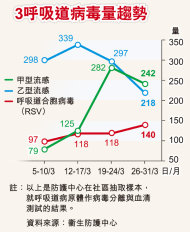
【經濟日報專訊】今年甲流、乙流同時活躍的流感高峰至4月仍罕見未止,過去一周再奪7人命,最年輕僅44歲,而專攻幼童的呼吸道合胞病毒(RSV)加入「戰團」,上月底數量大升44%,出現三病毒齊發惡的情況。

有私家兒科醫生指近兩月都有幼兒病人染RSV入院,高燒不退須留醫4至5日。

衞生防護中心表示,本港整體流感活躍程度仍處於高水平。中心實驗室的病毒分離數字顯示,之前以乙型流感為主導的流感高峰,近期轉變為甲型H3流感病毒與乙流病毒平分秋色的景況。

上月截至31日的最後一周,中心實驗室共錄得460株流感病毒,其中甲型H3流感佔236株,乙流則有218株,分別佔51%和47%。

上周死亡個案 最年輕僅44歲

流感數字持續高企,本港自1月13日至今,已錄得106宗因流感而入住公院深切治療部或死亡個案,當中61宗死亡,包括過去一周最新7宗死亡個案,分別為2男5女,年紀最輕44歲,最大為94歲。

伊利沙伯醫院急症室主管何曉輝指,本港今年流感高峰仍未見減退迹象,為近年少見,「過往好少4月頭仍是流感高峰」,致急症室求診人數近月持續迫爆,該院每日求診人數達600人次,較以往平日530至540多逾1成。

青山醫院一個成人精神科女病房自3月20日起,先後有8名年齡介乎22至50歲的女病人出現呼吸道感染徵狀,其中7人確診感染乙型流感,病人正隔離治療,情況穩定。

RSV病毒檢測 較上月初增44%

甲、乙型流感病毒雙重夾擊下,與此同時,專襲幼兒的RSV亦來襲。上月截至31日的最後一周,衞生防護中心共檢測到140個RSV病毒,較月初97個,大增44%(見表)。

兒科專科醫生周振軍指,過去兩月均有幼童因RSV和流感入院,上月有3名幼童感染RSV,包括兩名一歲多的幼兒,因咳嗽、氣促及高燒不退需入住私家醫院治療,均住院4至5日,另1名個多月大嬰兒,病情較輕,只需觀察毋須入院。

另外,他上月亦有5名兒童病人因流感要入院,其中2人感染甲流,3人感染乙流。周說,2月和3月,兒童因RSV和流感而要入院的人數相若,估計未來數周,人數會持續,「都會是病毒感染多於細菌感染」。

8.3.12

接種H5N1疫苗 無法預防H5N2病毒

接種H5N1疫苗 無法預防H5N2病毒接種H5N1疫苗 無法預防H5N2病毒

衛生署疾病管制局表示,全球至今尚無H5N2禽流感病毒感染的人類發病病例,現在也無H5N2人用疫苗;接種人用流感H5N1疫苗並無法預防H5N2禽流感病毒。疾管局表示,目前國內所儲備的人用流感H5N1疫苗,乃用以預防/H5N1流感病毒的感染。由於至今全球並無人類H5N2流感的發病病例,現階段最重要的,仍是要及早控制動物疫情,並持續監測病毒變異狀況,才能阻絕或減少病毒突變造成跨物種傳播的風險。

疾管局提醒,要避免禽流感病毒感染,應避免不必要的禽畜動物接觸,並應勤洗手,食用完全煮熟的禽肉和蛋類就沒有感染的危險。

5.3.12

疫苗可能比流感更危險 Vaccine may be more dangerous than the swine flu

By Dr Russell Blaylock
One can continue to believe that the global gurus of public health are responding appropriately to the swine flu emergency and willingly take the shot if they choose to do so. But such trust and complacency requires the omission of one key factiod: The vaccine contains an oil-based "adjuvant" containing "squalene." Adjuvants are used to boost an immune response. Squalene, which is a causal factor in Gulf War illness, causes crippling arthritis and premature death in about 100 percent of lab animals and has been associated with autoimmune diseases and premature death in people as well. Early reports of trials with the H1N1 vaccine show that the vaccine is already maiming and killing people. It appears certain that those who take the vaccine may not get the flu but can expect to die a painful and premature death—and WHO et. al know it.
An outbreak of swine flu that occurred in Mexico last spring eventually affected 4,910 Mexican citizens and resulted in 85 deaths. By the time it spread to the United States, the virus caused only mild cases of flu-like illness.
Thanks to air travel and the failure of public health officials to control travel from Mexico, the virus spread worldwide. Despite predictions of massive numbers of deaths and the arrival of doomsday, the virus has remained a relatively mild disease, something we know happens each year with flu epidemics.
Cases to date as of July 7, 2009. Worldwide, there have only been 311 deaths out of 70,893 cases of swine flu. In the United States, 27,717 cases have resulted in 127 deaths. Every death is a tragedy, but such a low death rate should not be the basis of a draconian government policy.
It is helpful to recall that the Centers for Disease Control, with the collusion of the media, constantly tell us that 36,000 people die from the flu each year, a figure that has been shown to be a lie. In this case, we are talking about 300 plus deaths for the entire world.
From whence this novel strain?
This virus continues to be an enigma for virologists. In the April 30, 2009 edition of Nature, a virologist was quoted as saying, "Where the hell it got all these genes from we don’t know."
Extensive analysis of the virus found that it contained the original 1918 H1N1 flu virus, the avian flu virus (bird flu) and two new H3N2 virus genes from Eurasia. Debate continues over the possibility that swine flu is a genetically-engineered virus.
Scandal. Naturally, vaccine manufacturers have been in a competitive battle to produce the first vaccine. The main contenders have been Baxter Pharmaceuticals and Novartis Pharmaceuticals, the latter of which recently acquired the scandal-ridden Chiron vaccine company. Both of these companies have had agreements with the World Health Organization to produce a pandemic vaccine.
Contamination. The Baxter vaccine, called Celvapan, has had fast track approval. It uses a new vero cell technology, which utilizes cultured cells from the African green monkey. This same animal tissue transmits a number of vaccine-contaminating viruses, including the HIV virus.
More contamination. The Baxter company has been associated with two deadly scandals. The first event occurred in 2006 when hemophiliac components were contaminated with HIV virus and injected in tens of thousands of people, including thousands of children. Baxter continued to release the HIV-contaminated vaccine even after the contamination was known.
Accidental release. The second event occurred recently when it was discovered that Baxter had released a seasonal flu vaccine containing the bird flu virus, which would have produced a real world pandemic, to 18 countries. Fortunately, astute lab workers in the Czech Republic discovered the deadly combination and blew the whistle before a worldwide disaster was unleashed [The IO, March, 2009].
Despite these two deadly events, WHO maintains an agreement with Baxter Pharmaceuticals to produce the world’s pandemic vaccine.
[Note: WHO announced that it would launch an investigation into Baxter’s "accidental" release of H5N1-contaminated flu vaccine that killed lab animals (ferrets) in the Czech Republic. No investigation has ever been conducted. ~DWH].
Squalene
Novartis, the second contender, also has an agreement with WHO for a pandemic vaccine. Novartis appears to have won the contract, since its vaccine is near completion. What is terrifying is that these pandemic vaccines contain ingredients, called "immune adjuvants" that a number of studies have shown cause devastating autoimmune disorders, including rheumatoid arthritis, multiple sclerosis and lupus.
Animal studies using this adjuvant have found them to be deadly. A study using 14 guinea pigs found that, when they were injected with the special adjuvant, only one animal survived. A repeat of the study found the same deadly outcome.
So, what is this deadly ingredient? It is called squalene, a type of oil. The Chiron company, maker of the deadly anthrax vaccine, makes an adjuvant called MF-59 which contains two main ingredients of concern—squalene and gp120. A number of studies have shown that squalene can trigger all of the above-mentioned autoimmune diseases when injected.
[Note: All higher organisms produce squalene. The squalene used as a vaccine adjuvant is a fish oil, particularly shark liver oil. The problem with injected squalene is that it signals the body to attack its own essential fatty acids. Combined with other vaccine ingredients, the result is autoimmunity, where the body begins attacking its own tissues. ~DWH]
The MF-59 adjuvant has been used in several vaccines. These vaccines, including tetanus and diphtheria, are the same vaccines frequently associated with adverse reactions.
Questionable studies. I reviewed a number of studies on this adjuvant and found something quite interesting. Several studies done on human test subjects found MF-59 to be a very safe immune adjuvant. But when I checked to see who did these studies, I found—to no surprise—that they were done by the Novartis Pharmaceutical Company and Chiron Pharmaceutical Company, which have merged. They were all published in "prestigious" medical journals. Also, to no surprise, a great number of studies done by independent laboratories and research institutions all found a strong link between MF-59 and autoimmune diseases.
Gulf War Illness. Squalene in vaccines has been strongly linked to the Gulf War Illness. On August 1991, Anthony Principi, Secretary of Veterans Affairs, admitted that soldiers vaccinated with the anthrax vaccine from 1990 to 1991 had an increased risk of 200 percent in developing the deadly disease amyotrophic lateral sclerosis (ALS), also called Lou Gehrig’s disease. The soldiers also suffered from a number of debilitating and life-shortening diseases such as polyarteritis nodosa, multiple sclerosis (MS), lupus, transverse myelitis (a neurological disorder caused by inflammation of the spinal cord), endocarditis (inflammation of the heart’s inner lining), optic neuritis with blindness and glomerulonephritis (a type of kidney disease).
Brain inflammation. Because squalene, the main ingredient in MF-59, can induce hyperimmune responses and induce autoimmunity, a real danger exists for prolonged activation of the brain’s immune cells, the microglia. This type of prolonged activation has been strongly associated with such diseases as multiple sclerosis, Alzheimer’s disease, Parkinson’s disease, ALS and possibly vaccine-related encephalitis. It has been shown that activation of the systemic immune system, as occurs with vaccination, rapidly activates the brain’s microglia at the same time, and this brain inflammation can persist for long periods.
So, how would the gp120 get into the brain? Studies of other immune adjuvants using careful tracer techniques have shown that they routinely enter the brain following vaccination. What most people do not know, even the doctors who recommend the vaccines, is that most such studies by pharmaceutical companies observe the patients for only one to two weeks following vaccination—these types of reactions may take months or even years to manifest.
The profit motive
It is obvious that the vaccine manufacturers stand to make billions of dollars in profits from this WHO/government-promoted pandemic. Novartis, the maker of the new pandemic vaccine, recently announced that they would not give free vaccines to impoverished nations—everybody pays.
Grim reality. One must keep in mind that once the vaccine is injected, there is little you can do to protect yourself—at least by conventional medicine. It will mean a lifetime of crippling illness and early death.
The best medicine. There are much safer ways to protect oneself from this flu virus, such as higher doses of vitamin D3, selective immune enhancement using supplements and a good diet.
source

1.3.12

禽流感武器化辯論, '蝙蝠流感'在媒體引起恐慌


‘Bat Flu’ Scare Hits Media Among Weaponized Bird Flu Release Debate

Anthony Gucciardi
Activist Post

Amid the controversy surrounding the potential release of heavily weaponized H5N1 bird flu, scientists are now reporting that they have found evidence of flu in bats, and state that the risk to humans is unclear.

Being labeled as ‘bat flu’, the discovery marks the first documented report of a flu virus in winged mammals. For now, scientists have not been able to grow the virus and are unaware of how easily the virus can spread.

The news shocked many scientists who previously thought that the flu had already been discovered in all possible animals. While flu bugs have been tracked in animals such as dogs, horses, whales, and seals, bats were never thought to contract the flu. Interestingly, however, it may have been discovered around five years ago.

Back in 2009, Russian virologists reported that they had found flu in bats, but their claims were rejected due to insufficient evidence.
'Most people are fairly convinced we had already discovered flu in all the possible' animals, said Centers for Disease Control and Prevention scientist Ruben Donis, who co-wrote the bat flu study.
The news could not have come at a better time for some scientists who continue to push for a release of the mutated H5N1 bird flu strain, which was mutated 5 times in order to become highly contagious between ferrets – the very animal model used to study human flu infection. Taking attention away from the bird flu release controversy, bat flu may soon become the new focus in the field of potentially threatening viruses.

For now, the WHO says that the weaponized strain will not be released until a panel of ‘experts’ determines it to be safe. Paul Keim, chair of the National Science Advisory Board for Biosecurity, explained how volatile of a weapon the mutated bird flu could become:
'This is such a dangerous biological weapon, it would not be controllable. Whoever used it would doubtlessly decimate their own people as well,' Keim said.
Scientists say that bat flu could potentially pose a risk to humans if it were to mingle with more common forms of influenza, swap genes, and mutate into something more dangerous.

If you’re worried about the flu, natural solutions do exist. Vitamin D can slash your risk of the flu by nearly half, and is more effective than harmful medical interventions.

url

26.2.12

魚翅含高濃神經毒素

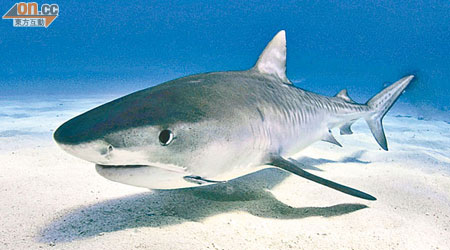
【本報綜合報道】鯊魚的鰭和軟骨含有豐富蛋白質等成分,據稱有強壯骨骼及治療關節炎等功效,不過,美國科學家測試七種鯊魚的魚鰭,發現含有高濃度神經毒素β- 甲氨基-L-丙氨酸(簡稱BMAA),與老年癡呆症和葛雷克氏症患者腦部中發現的神經毒素相關。科學家認為,此神經毒素可能危害食用者健康。有關研究刊於 《海洋藥物》期刊。

美科學家指,鯊魚鰭含有神經毒素,對身體有害。
美國邁阿密大學對佛羅里達州海域的鯊魚進行研究,從黑吻真鯊、黑鰭礁鯊、窄頭雙髻鯊、牛鯊、大雙髻鯊、檸檬鯊和護士鯊等七種活鯊魚身 上,取出小型魚鰭樣本,發現含有BMAA,濃度由每毫克一百四十四至一千八百三十八納米克。研究人員指BMAA與阿茲海默症和葛雷克氏症患者腦中發現的神 經毒素相關,而且兩者濃度相若。

食用或致大腦退化

專家擔心進食鯊魚肉、軟骨等可能危害健康,而鯊魚食品不只在於魚翅羹,亦有製成其他鯊魚補給品,故對此感到憂慮。研究人員希望 研究結果有助勸阻宰鯊行動。阿茲海默症是老年癡呆症一種,而葛雷克氏症又稱肌萎縮性脊髓側索硬化症,因中樞神經系統內控制隨意肌的運動神經元退化所致。早 前有研究指,食用含此神經毒素的關島食果蝙蝠與大腦退化症有關。
url

曾赴海豐 八旬翁染「末日菌」

【本 報訊】末日惡菌再襲港!一名向來健康良好的八十二歲老翁感染NDM泛耐藥腸桿菌科細菌,現時在屯門醫院留醫,情況穩定,成為本港錄得的第六宗個案。他是本 港居民,與兒子住在觀塘,經常往返內地,屯門醫院驗出他痰液有該種惡菌,但他沒有腸胃炎徵狀,衞生防護中心仍調查這宗個案,並將個案通報國家衞生部。

該老翁已退休,一月六日前往內地住在海豐,本月六日被內地鄰居發現老翁在住所中昏迷,同日被送往海豐彭湃紀念醫院,入院後被發現他枕骨 位置有傷。他於本月十一日被送返香港,在屯門醫院接受進一步治療,入院診斷後證實患上吸入性肺炎,病人於本月十七日抽取的痰液樣本對NDM泛耐藥腸桿菌科 細菌呈陽反應,但他沒有出現腸胃炎病徵。

NDM菌抗藥性特強

NDM是一種酶,可以使碳氫黴烯類和其他滭內酰胺抗生素失去功效,含該基因的細菌通常會對多種抗菌藥物呈抗藥性,限制治療方法,並會導致嚴重臨床感染,難以治理。病人感染後可能沒有病徵,也可能危及生命,甚至致命,風險程度視乎身體哪部分受感染,以及病人整體健康狀況。
傳染病專科醫生勞永樂估計,患者跌倒後入院,需要別人照顧,但照顧者為患者或其他病人換尿片後,沒有洗手便接觸患者的口,惡菌進入患者口腔,咳嗽期間將帶菌痰液吸入肺,導致吸入性肺炎,故化驗痰液可驗出該菌。若該惡菌在病人肺內,造成入侵性感染,治療會相當困難。
url

25.2.12

河北傳爆變種沙士 京啟動衞生應急機制

河北省保定市近日傳爆發變種沙士疫情,一人死亡,引起恐慌。保定市衞生局前日否認消息並稱事件僅屬謠言,但北京市卻宣布啟動衞生應急協作機制,允許武警在緊急情況下出動支援衞生部門,引起網民懷疑機制是與應對沙士疫情有關。
對於有傳保定市爆發變種沙士疫情,保定市衞生局強調轄區內的醫院並無疫情發生,醫院運作一切正常;國家疾控中心人員亦表示未收到有關消息。

允武警邊行動邊上報

但 北京市衞生局及武警北京市總隊前日聯合舉辦衞生應急協作機制啟動儀式。衞生局長方來英表示,有關機制將加強北京市救援應急工作,今後遇上重大疫情、恐怖襲 擊及大規模集體中毒等突發事件,北京市武警將參與支援及現場處置,並允許在緊急情況下邊派武警採取應急行動,邊上報批准,提升應付突發事件的效率。
新機制令網民議論紛紛,網民指機制相當於允許衞生部門動用武裝力量,懷疑衞生部門將藉此阻止鄰近的保定市沙士疫情消息洩漏,圖隱瞞真相。
url

19.2.12

世衛:致命禽流感研究應暫保密

(路透倫敦/日內瓦17日電)世界衛生組織今天表示,關於科學家如何讓H5N1禽流感病毒突變,成為可引發人類致命疫情的病毒的2項研究,只有在專家全面評估過風險後才能發布內容。
禽流感專家與美國安全官員於日內瓦舉行高層會議後,一名世衛官員表示,他們已經達成協議,原則上會將引發爭議的研究的詳細內容保密,直到能進行更深入的風險分析。
世衛主管衛生安全與環境的助理秘書長福田敬二(Keiji Fukuda)說:「從公共衛生的角度來看,應該公開這兩項研究的資訊。不過,這項研究有重大的公共安全顧慮,應該事先處理好。」中央社(翻譯)url

27.1.12

墨西哥流感個案激增政府否認疫情爆發


墨西哥季節性流感案例激增,當地報章警告,爆發流感疫情的風險,不斷增加,但當局否認。衛生部門說,流感個案雖然有所上升,但現時正值流感高峰期,情況屬於正常。教育部在全國所有小學,加強檢查,預防H1N1流感。首都墨西哥城,多間學校關閉,但教育部就強調,關閉的學校是私校,並非政府的指令。

當地衛生部門上周日說,一月至今,有六百三十幾宗確診季節性流感個案,其中十人死亡,大部分是感染H1N1流感病毒,在一周內,激增兩倍多。
url

深井泳灘驚現H5N1禽流鵝屍

(綜 合報道)(星島日報報道)禽流感陰霾揮之不去,以食燒鵝馳名的深井,附近泳灘發現帶有H5N1病毒鵝屍,傳染病專科醫生認為,鵝對禽流感病毒抵抗力較強, 此事為本港禽流感風險響起警號,須研究病毒有否變種。深井著名燒鵝飯店負責人指出,有關消息不會影響他們生意,但亦有食客表示暫時不吃鵝。
漁農署昨公布,上周五在深井青山公路十三咪釣魚灣泳灘發現一隻腐爛鵝屍,檢驗證實帶有H5N1病毒,漁農署發言人稱,現場三公里範圍內均沒有雞場,亦無迹象顯示有人散養家禽。
昨午,曾有食環署人員,在釣魚灣碼頭及青山公路一帶巴士站進行消毒工作,距離釣魚灣約二百米外,正是以食燒鵝馳名的深井,該處的燒鵝飯店昨日如常營業,其中陳記燒鵝飯店職員稱,他們一向採用冰鮮鵝做燒鵝,近日春節假期生意都比平日興旺,反映食客胃口無受影響。
有食客稱暫時不吃鵝
深井裕記燒鵝飯店負責人吳小姐稱,他們的燒鵝來貨均來自廣州三個飼養場,十多年前已沒有自行屠宰,來貨全部均通過食環署抽驗,包括驗血清等,確 保來貨沒有禽流感。她又說:「我們每天會引入二百至三百隻鵝,會確保來貨穩定及健康,其實香港很多年前亦曾在鵝身上發現禽流感病毒,但對於我們的生意影響 不大。」
昨晚不時有食客駕車到深井食肆光顧,有食客聞悉附近釣魚灣發現帶病毒鵝屍後,表示暫時不吃鵝,叫其他小菜亦很好吃。另一對到深井訪友拜年後光顧食肆的姓溫夫婦稱,那隻鵝屍說不定由內地水域飄過來,根本不用擔心。
因應這宗個案,漁護署已致電家禽農戶,提醒他們加強預防禽流感及生物安全措施。衞生署繼續推行公眾健康教育,提醒市民要注意個人和環境衞生。
傳染病專科醫生勞永樂表示,鵝對禽流感病毒的抵抗力較強,一旦發現鵝屍帶禽流感病毒,顯示禽流感風險增加,認為當局須研究病毒有否變種。政府應加強檢驗內地輸港家禽,及打擊走私禽鳥活動。記者 黃文威 張聲慧 尹敬堂
url

伸延閱讀

世界媒體看中國:禽流感的驚恐與信息

貴州男子染禽流感亡學者指本港風險無提升

禽流感變種病毒研究暫停兩月

染禽流感 越柬報2起死亡病例

印尼一人疑接觸鴿子後感染禽流感死亡

南生圍小白鷺屍體證實感染H5禽流感病毒

24.1.12

墨西哥豬流感增至573宗

【本報訊】墨西哥自去年十二月起再次爆發甲型H1N1豬流感,近日的確診個案更突然飆升,由上周四的三百三十三宗急升至目前的五百七十三宗,死亡人數則多 達九人。衞生部門表示,豬流感個案佔當地流感個案九成。甲型H1N1豬流感於○九年四月在墨西哥爆發時,便造成逾一千二百五十人死亡。
url

23.1.12

貴州男子染禽流感亡學者指本港風險無提升

貴州省一名三十九歲男子,感染高致病H5N1禽流感病逝,是繼深圳寶安一名巴士司機,上月底感染禽流感死亡後,內地三個多星期來的第二宗禽流感死亡病例。 患者本月六日發病入院,上星期四轉送貴陽醫學院附屬醫院重症監護病房,延至今日中午不治。省衛生廳表示高度重視,加強防疫工作,確定死者的七十一名密切接 觸者,健康未出現異常。

本港衛生防護中心接獲國家衛生部通報,指患者發病前沒有明確禽鳥接觸史。食物安全中心表示,本港沒有從貴州入口活雞、冰鮮雞或禽蛋。有學者表示,本港的禽流感疫情風險並無因此提升。
http://hk.news.yahoo.com/%E8%B2%B4%E5%B7%9E%E7%94%B7%E5%AD%90%E6%9F%93%E7%A6%BD%E6%B5%81%E6%84%9F%E4%BA%A1%E5%AD%B8%E8%80%85%E6%8C%87%E6%9C%AC%E6%B8%AF%E9%A2%A8%E9%9A%AA%E7%84%A1%E6%8F%90%E5%8D%87-104000150.html

21.1.12

數名禽流感專家暫停一項具爭議的研究

數名禽流感病毒學專家決定未來兩個月,暫停有關研究。
美國與荷蘭的專家,早前製造一種傳染性高的致命禽流感病毒,並以動物為研究對象,了解禽流感在動物間的傳播途徑。研究引起很大爭議,外界擔心,如實驗室發生事故,病毒可能外泄,恐怖分子會利用病毒,製造生化武器。
專家團隊在兩本著名科學雜誌刊登公開信指,明白市民擔心,但有關研究對公眾健康和衞生十分重要,呼籲召開國際會議,討論如何更好地開展研究,並與世界衞生組織商討。
http://hk.news.yahoo.com/數名禽流感專家暫停-項具爭議的研究-024700172.html

科學家暫停研究更致命禽流感病毒

一 批研究更致命禽流感病毒的科學家,鑑於外界關注研究成果可能會被用作生物恐怖襲擊,決定暫停研究六十日。三十九名科學家,包括港大微生物學家管軼,在寫給 「自然與科學」雜誌的聯署信中,為研究更致命及更易散播的禽流感病毒辯護,認為研究關乎公眾衛生,有助製定監察計劃,留意可能變種的H5N1病毒。資助研 究的美國政府上月要求研究小組,不要公開詳細數據,以防恐怖份子複製症毒。聯署信件的科學家說,他們是自願暫停研究工作,以便全球政府及衛生機構,評估研 究的好處,以及如何將風險降至最低。
http://hk.news.yahoo.com/科學家暫停研究更致命禽流感病毒-223400082.html

20.1.12

染禽流感 越柬報2起死亡病例

(法新社河內19日電) 越南今天通報近兩年第1起
人類感染禽流感病毒死亡病例,柬埔寨也傳出1名感染
禽流感的2歲男童病逝。
中國大陸去年12月底通報18個月內首起H5N1禽流感
病毒死亡病例後,亞洲地區禽流感疫情擴大疑慮升高,
但越南當局表示,目前沒有必要驚慌。
胡志明市衛生局的醫師說:「禽流感疫情仍在我們
控制範圍內,一些醫療團隊已經獲派到南部省分視察情
況。」
本月11日病逝的越南患者是1名鴨農,來自越南南
部湄公河三角洲地區後江省(Hau Giang),專家正調
查感染源是否來自他的鴨群。
這是越南自2010年4月以來首起人類感染禽流感死
亡病例。
聯合國世界衛生組織(WHO)也表示,柬埔寨1名感
染禽流感的2歲男童病逝,這是柬埔寨今年第1起感染禽
流感病毒死亡案例。(譯者:中央社盧映孜)
http://hk.news.yahoo.com/染禽流感-越柬報2起死亡病例-092009534.html

19.1.12

柬埔寨男童感染H5N1禽流感病毒死亡

柬埔寨一名男童感染H5N1禽流感病毒死亡。
衞生部門說,這名2歲男童一周前證實受感染,周三淩晨死亡,這是柬埔寨今年首宗人類感染禽流感死亡病例。家人證實該男童曾接觸過病死禽類。

福克蘭群島 拒「病毒郵輪」靠岸

【本報綜合報道】豪華郵輪「星河公主號」(Star Princess)由於船上爆發諾沃克病毒,上周六被福克蘭群島拒絕靠岸。有乘客投訴登島遊覽的計劃泡湯,亦有專家指當局反應過度。

船上約三千五百人中,有七十四名乘客及船員感染諾沃克病毒,當中二十人出現嘔吐及腹瀉等症狀。與妻子同遊的英國遊客斯特金表示,原本在 福克蘭群島安排了觀光行程,但如今已泡湯。另有來自阿根廷的乘客本欲在登島時,拜祭在八二年福克蘭群島戰役中喪生的親人,不過計劃同樣告吹。

乘客投訴 專家批處理過敏

福克蘭群島的醫療部門指,若島上爆發病毒感染,將對有限的醫療資源造成巨大壓力,故當局的決定是為了旅遊業和更多人利益着想。有傳染病專家則形容決定過於誇張,並指感染者一般可於數日內痊愈,不會對醫院造成負擔。「星河公主號」的船長則形容這決定非常不合理及史無前例。
http://orientaldaily.on.cc/cnt/china_world/20120119/00180_032.html

10.1.12

流感病毒樣本 急增一倍

【本報訊】冬季流感高峰期殺到,衞生防護中心發現近期流感活躍,本月初驗出的流感病毒樣本達一百四十一個,較去年十一月中急增一倍。有家庭醫學專科醫生指出,天氣持續寒冷,因感冒求診者較往日增近兩成。有呼吸科專家預告流感個案於未來數周逐步增加。


衞生防護中心公共衞生檢測中心最近分離出的流感病毒數目上升,截至去年十一月十二日的一周內錄得六十八樣本,今年一月七日一周急升至一百四十一個樣本。化驗顯示,截至今年一月四日共一百個樣本中,以乙型流感病毒佔多,有六十個,其餘為甲型流感病毒。
衞生防護中心表示,會繼續密切監察海外及本地流感情況,加強與醫院管理局及私家醫院聯繫,監察因流感並需入住深切治療部或死亡的個 案,兒童流感個案亦不會掉以輕心。家庭醫學專科醫生關嘉美指,近月因出現傷風、咳嗽、感冒或頭痛等徵狀的求診人數增加一至兩成,接種流感疫苗的人數亦增 加,但暫未接獲出現嚴重併發症如氣管炎的個案。

料農曆新年後感染人數升

中文大學呼吸內科教授許樹昌指,暫未發現流感入院病人大增:「通常凍咗一段時間先會多個案」,他預料農曆新年過後,感染人數將增加。
http://orientaldaily.on.cc/cnt/news/20120110/00176_033.html

伸延閱讀

日進入冬季流感高峰期

13歲童流感 疑併發腦膜炎

35天無雨無雪 濕度如撒哈拉 乾燥催病氣 東京爆流感

港關注美新流感疑人傳人

"點頭病"入侵穌丹(2003年BC新聞)

'Nodding disease' hits Sudan
Tuesday, 23 September, 2003, 21:46 GMT 22:46 UK


By Andrew Harding
BBC, Lui, southern Sudan

Ten-year-old Susannah Jackson is dying of what may be the world's newest and oddest disease - an illness so rare and mysterious that science has not yet come up with an official name for it.
Sitting outside her family's mud hut, near the small town of Lui, Susannah is gripped by a series of brain seizures which force her neck to arch forwards, down, and then up again.


Susannah
The disease is puzzling doctors and scientists
No wonder people in this isolated corner of southern Sudan call it "nodding disease." "We have no clue as what is causing this. It's like a detective novel and a murder mystery, because it's fatal," says Dr Mickey Richer, a tropical disease specialist from Unicef.
So far, almost 300 children are known to have caught the disease - all in one small region of the country.
Bizarrely, the seizures normally occur when the sufferers start to eat, or when it is particularly cold.
When Dr Richer asks for a bowl of sorghum to be placed in front of Susannah, the "nodding" begins almost immediately, and stop when she has finished eating.
Curiously, Susannah does not react if she eats unfamiliar food - a chocolate bar for instance.
Susannah's eight-year-old brother, Jacob, is now in Lui's crowded hospital with the same disease - at a more developed stage.
He shows signs of being mentally retarded and physically stunted.
During a particularly fierce seizure he threw himself into a fire, and is now being treated for severe burns to his leg.
Two other children in the same ward have almost identical stories.
Epicentre
An hour's drive from Lui along a rutted track lies the village of Amadi - a silent cluster of huts trapped in a forest of thick green grass.
Amadi is now considered to be the epicentre of the disease - 12% of children here are affected.

Dr Richer examines Malika Philip
About 12% of children in Ramadi are affected
Last year, experts from the World Health Organisation did neurological scans on some of the children, enabling them to confirm that this is a specific and unique condition. Twelve-year-old Ruben Nicholas stands in the middle of the village, gripped by a sudden seizure.
It looks as though someone is forcing his chin down onto his chest.
"He is nodding three times a day," says his father, Nicholas Lado.
"The disease stops him from growing. His brother died from the same disease, in August."
Dr Richer gets out her stethoscope and starts examining a dozen children. A small boy called Maika Philip stares dully into the distance. He looks about 11, but his mother confirms that he is 18.
So what could be causing this horrific outbreak? If this had happened in western Europe, it seems likely there would be at least some answers by now.
Here, in poverty-stricken southern Sudan, families still do not know if they should be trying to quarantine their children.
"If one child has nodding, we separate them from the other children, because maybe it's through air we don't know," says Reverend Sosthen Amen Lati, whose son is affected.
River theory
Some villagers say the disease is a curse, others blame the country's long civil war and suspect that government forces have been dropping chemical weapons on Lui and other rebel-held areas.
A toxicology report commissioned last year by the United Nations comes close to ruling out chemical warfare, and also plays down the likelihood of any link to local diets or food production.

Sudanese child fetching water from Yei River
Most victims live near Yeri River in southern Sudan
At the same time it cautiously raises a few intriguing theories, including the possibility of infected monkey flesh. International relief aid is also mentioned. Some locals have admitted to eating donated seeds, meant for planting not consumption, which are coated with toxic substances.
But Dr Richer's hunch is more straightforward. She notes that the victims are all concentrated near the Yei River.
She also points out that 93% of those surveyed are infected with a parasitic worm which causes Onchocerciasis (also known as river blindness).
The level of infection among children without "nodding" is 63%. The worm is carried by black flies which breed near fast-flowing rivers like the Yei.
Could it turn out to be the killer in Dr Richer's mystery? 

http://news.bbc.co.uk/2/hi/africa/3133440.stm

9.1.12

烏干達爆發神秘點頭病百死

烏干達北部爆發一種神秘怪病「點頭病」,目前已經導致100多人死亡,2000多人被感染。
「點頭病」(nodding disease)在烏干達是2009年9月份第一次被發現的。它的徵狀包括劇烈點頭、思維遲鈍、發育遲緩,對兒童和青少年影響最大。
感染這種怪病的兒童和青少年會在吃東西或者感覺到冷的時候劇烈點頭。但是發病時間短暫,在停止吃東西或者再次感到暖和的時候抽搐就會停止。
據稱,兒童一旦患上了這種疾病,他或者她的發育似乎完全和永久性受阻。大腦發育也受到阻礙,造成患者智力缺陷。
科學家們已經對這種怪病展開一系列調查和研究,但目前還無法找到病因。來自烏干達衛生部、世界衛生組織以及疾病預防控制中心的科學家將前往感染區,重新調查這種疾病的誘因。
南蘇丹一些地區在2003年就有大約300名兒童得了這種怪病。聯合國兒童基金會的熱帶病專家當時調查,一個叫阿馬迪的小鎮,全村12%的兒童都感染了這種病。
http://hk.news.yahoo.com/烏干達爆發神秘點頭病百死-050020948.html

7.1.12

印度發現全抗藥性肺結核病個案

07.01.2012 15:16
繼伊朗之後,印度亦發現多宗全抗藥性肺結核個案。印度一間醫院在十二名病人的樣本中,分離得到這種全抗藥性結核菌。印度是全球第二個國家,發現這種比"多重抗藥性肺結核菌"更加致命的病菌。 這十二名病人之中,有一人已經死亡。印度是肺癆病較多的國家,每日有一千人死於肺結核。 
http://www.881903.com/Page/ZH-TW/newsdetail.aspx?ItemId=469078&csid=261_367